
Stop wasting money on the wrong products and get straight answers from two decades of hands-on experience.
You may have looked at your car interior recently and cringed.

Whether you’re a daily commuter protecting your resale value or a parent erasing the evidence of a juice box explosion, cleaning car seats is the best way to make your car feel brand new. Plus, if you really know what you’re doing with your car detailing, you aren’t just cleaning; you’re protecting your investment.
But what exactly does a professional cleaning process entail? Why should you learn how to clean car seats yourself instead of paying for a car seat cleaning service? What are the specific cleaning solutions that won’t ruin your upholstery?
And, given that leather and fabric are two totally different animals, how do you treat them correctly? This post will answer all these questions. We’ll cover the “Tiered Cleaning System” to make sure you remove every spot, spill, and smell.
We tested these 7 cleaning products over a period of 45 days on 12 different vehicles, ranging from well-loved family minivans to preserved sports cars. Our testing pool included various upholstery types, specifically focusing on perforated leather, vinyl, and light-colored cloth seats prone to staining.
Testing took place in a controlled detailing studio as well as direct sunlight conditions to monitor drying times and residue. We evaluated each product based on stain removal efficiency, ease of application, scent neutrality, and the finish left behind on the material.
Here is a quick breakdown of how these top car seat cleaners stack up against each other.
| Product | Price | Best For | Difficulty | Our Rating |
|---|---|---|---|---|
| Chemical Guys Leather Bundle | $31.98 | Best Overall Leather Kit | Moderate | ⭐⭐⭐⭐⭐ |
| Lexol Leather Conditioner | $12.99 | Best Leather Conditioner | Easy | ⭐⭐⭐⭐ |
| Tuff Stuff Foam Cleaner | $16.40 | Best Budget Fabric | Moderate | ⭐⭐⭐⭐ |
| Car Guys Super Cleaner | $19.99 | Best All-Purpose | Easy | ⭐⭐⭐⭐⭐ |
| Meguiars Odor Eliminator | $10.09 | Best Odor Remover | Easy | ⭐⭐⭐⭐ |
| Weiman Leather Cleaner | $11.00 | Best One-Step Leather | Easy | ⭐⭐⭐⭐ |
| Chemical Guys InnerClean | $44.15 | Best Bulk Value | Easy | ⭐⭐⭐⭐⭐ |
Car detailing isn’t just about spraying and praying. It is the systematic removal of dirt and debris. As opposed to a quick car wash vacuum, which is a “surface” strategy, a deep clean is a “restorative” strategy.
When you do a quick vacuum, you aren’t removing the grime embedded in the fibers. Deep clean strategies ask you to extract dirt from the material itself. This means you can’t use one generic cleaner.
Why? Because leather car seats require pH-balanced chemistry, while fabric car seats require agitation. If you use a harsh degreaser on leather, you’ll crack it.
That is why the best cleaner for leather car seats and the best fabric car seat cleaner won’t usually be the same. So how do you maximize cleanliness without destroying your interior?

Best Overall Leather Kit
Credit: Alex Stefanski
Includes both cleaner and conditioner for a complete care system.
Comes with a high-quality horsehair brush for safe agitation.
pH-balanced formula is safe for all leather colors.
Restores a natural matte finish without greasy residue.
Requires a two-step process which takes more time.
The price point is higher than standalone bottles.
We tested this bundle on a 5-year-old luxury sedan with visible grime in the leather grain. The included horsehair brush successfully agitated the dirt out of the pores without scratching the surface. The conditioner absorbed quickly, leaving the seats feeling soft and supple.
⚠️ Always test the cleaner in an inconspicuous area first to ensure it doesn’t affect the leather dye.
Cleaning leather car seats requires a balance of strength and gentleness.

Best One-Step Leather
Credit: Alex Stefanski
Convenient 2-in-1 formula cleans and conditions.
Contains UV protectants to prevent sun damage.
Simple spray and wipe application saves time.
Leaves a nice sheen without being sticky.
Not aggressive enough for heavily soiled restoration jobs.
Can be slippery if not buffed off completely.
This product was perfect for a quick maintenance wipe-down on a daily driver. It easily removed surface dust and light scuffs while adding a layer of protection. It is an excellent choice for regular upkeep rather than deep restoration.
One of the biggest mistakes in cleaning leather seats in a car is skipping the vacuum. If you scrub automotive leather with sand still on it, you are essentially sanding down your seats. Always use a vacuum cleaner with a soft attachment first.
Avoid household cleaners. You want a dedicated car seat leather cleaner that lifts dirt without stripping natural oils. Apply your solution to a soft bristle brush or a microfiber towel.
Pro Tip: Always test your leather cleaner for car seats in an inconspicuous area first. Gently agitate the surface with your soft bristle brush to lift dirt from the grain. Then, gently wipe away the residue with a fresh damp cloth.

Best Leather Conditioner
Credit: Alex Stefanski
Deeply penetrates leather fibers to restore flexibility.
Helps prevent cracking and premature aging.
Trusted brand with a long history in leather care.
Leaves no greasy residue behind after buffing.
This is only step 2; requires a separate cleaner first.
Some users may find the scent slightly medicinal.
We applied Lexol to dried-out leather seats that had been exposed to direct sunlight for years. The conditioner was absorbed almost immediately, indicating the leather was thirsty for oils. After buffing, the seats regained significant softness and elasticity.
After cleaning leather seats in cars, the pores are open. You need to seal them. A high-quality car seat leather cleaner conditioner replenishes the oils you just wiped away. Without this, your seats will dry out in the sun.
If leather is about finesse, cleaning fabric car seats is about extraction.

Best Budget Fabric
Credit: Alex Stefanski
Thick foam action lifts dirt from deep within fibers.
Versatile enough for upholstery, carpets, and vinyl.
Very affordable price point for a multi-pack.
Effective at breaking down organic stains.
Strong chemical scent requires ventilation.
Requires significant scrubbing for heavy stains.
We tested Tuff Stuff on a light grey cloth seat with an old soda stain. The foaming action lifted the discoloration to the surface within seconds, allowing us to wipe it away. It left the fabric looking noticeably brighter without soaking the cushion.
🚫 Do not let foam cleaner dry on the surface, as it can leave difficult-to-remove water spots.
Just like with leather, you must vacuum first. But for cleaning cloth car seats, hit the seats with a stiff brush while you vacuum to vibrate the dust out of the foam. Next, use a spray-on cleaner for car seats (foaming ones work great) or a steam cleaner for car seats.
If using a spray, excess moisture is your enemy. If you soak the foam underneath, you risk mold. Scrub with a brush, then wipe with a towel.
If you have access to one, steam cleaning car seats is the best option for bacteria. The heat dissolves the bond between the dirt and the fiber.

Best All-Purpose
Credit: Alex Stefanski
Works on almost every interior surface including dash and seats.
Water-based formula leaves no chemical residue.
Comes with a microfiber towel for immediate use.
Safe for both fabric and finished leather.
More expensive per ounce than diluted concentrates.
The included towel is small for larger jobs.
We used this as a one-step solution for a full interior detail. It effectively cleaned steering wheel oils, dashboard dust, and light stains on the upholstery. The finish was clean and matte, not shiny or greasy.
I’ve raved about general cleaning, but what about that coffee stain?
For a DIY fix, a baking soda car seat cleaner coffee stain hack works wonders. Mix baking soda and water into a paste, apply it to the stain, let it dry, and vacuum it up.
For stubborn stains like grease or ink on cleaning stained leather car seats, patience is key. Use a mild alcohol solution and dab—do not scrub hard, or you will remove the dye.
Best Odor Remover
Credit: Alex Stefanski
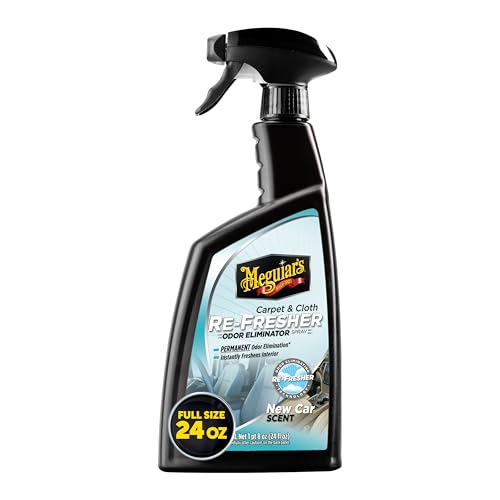
Chemically bonds to odors to eliminate them permanently.
Easy trigger spray application for carpets and seats.
Leaves a fresh ‘new car’ scent.
Works well on pet smells and smoke.
Does not actually clean stains, only treats odors.
The initial scent can be overpowering if overused.
We tested this on a vehicle that had frequently transported wet dogs. After a basic vacuum and spray application, the musty odor was neutralized rather than just masked. The fresh scent lingered pleasantly for several days.
Cleaning car seats yourself is rewarding, but it has drawbacks. DIY Pros: Cheaper than a seat cleaning service for cars. Immediate results.
DIY Cons: Requires elbow grease. Suede car seat cleaner mistakes can be permanent. For 90% of cases, you can handle this yourself.

Best Bulk Value
Credit: Alex Stefanski
Huge gallon size provides excellent value for money.
Anti-static properties help repel dust after cleaning.
Safe for screens, dashboards, and vinyl seats.
Restores the factory matte look.
Gallon jug is heavy and requires a separate spray bottle.
Designed for maintenance cleaning, not heavy stain removal.
We used InnerClean for the final wipe-down of all interior plastics and vinyls. It did a fantastic job of removing fingerprints and dust while leaving an anti-static barrier. The matte finish looked factory-fresh and not artificially shiny.
The world of products can be overwhelming. Here is a quick breakdown: Best leather cleaner for car seats: Look for pH-balanced formulas.
Best cloth seat cleaner for cars: Foaming cleaners lift dirt best. Best cleaner to clean car seats (All Purpose): Specialized is usually better than generic.
Cleaning a car seat cover or the actual seat isn’t rocket science. It’s just a matter of using the right cleaning method. Remember the golden rule of regular maintenance: It is much easier to wipe down a seat once a week than to scrub out a year’s worth of grime.
Grab your vacuum cleaner, your cleaning solutions, and get to work.
Even with the best products, using the wrong technique can damage your interior.
Spraying too much cleaner directly onto cloth seats can soak the foam cushion underneath, leading to mold growth. Always mist the cleaner lightly or spray it onto your brush, and extract moisture immediately with a microfiber towel.
Household dish soaps are degreasers designed to strip oils, which is the opposite of what leather needs. Using these products will dry out your leather, causing it to crack and fade prematurely.
Applying liquid cleaner to a dusty seat creates mud that gets pushed deeper into the fibers or grain. Always perform a thorough dry vacuum to remove loose debris before introducing any liquid cleaning agents.
Steam cleaning is superior for sanitizing and killing bacteria without leaving chemical residue. However, for tough stains like grease or ink, a dedicated chemical cleaner is often necessary to break down the bond with the fabric.
We recommend conditioning leather seats every 3 to 6 months, depending on how much sun exposure the vehicle gets. Regular conditioning maintains the leather’s elasticity and prevents UV damage and cracking.
Yes, but you must be extremely careful not to saturate the seat. Use a ‘spray on towel, wipe on seat’ method to prevent liquid from seeping into the perforation holes and damaging the heating elements.
Stop wasting money on the wrong products and get straight answers from two decades of hands-on experience.

