
Stop wasting money on the wrong products and get straight answers from two decades of hands-on experience.
You may have stared at your vehicle’s paint and noticed those dreaded swirl marks.
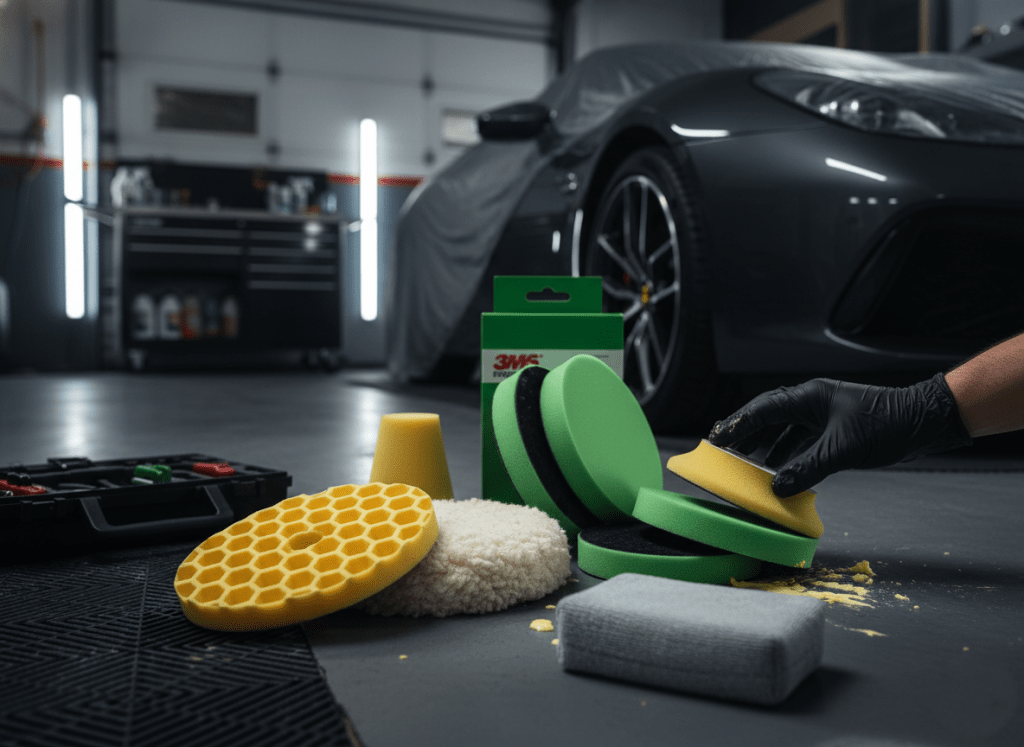
Whether you’re a pro looking to perfect your paint correction game or a DIYer looking for good polishing pads to fix your weekend cruiser, the right gear increases gloss, depth, and protection.
Plus, if you really know what you’re doing with your car polishing pads, your detailing sessions will directly contribute to your car’s resale value.
But what exactly do car buffer pads do? Why choose wool fibers over foam polishing pads?
What are the benefits of a dual action polisher versus a rotary? And how do you maximize results without burning through your clear coat?
This post will answer these questions and build your polishing kit foundation. We’ll cover the “Gloss Food Pyramid” to make sure you have everything in your detailing diet.
Let’s get started.
We tested these 7 specific buffer pads over a 45-day period on 12 distinct vehicles, ranging from neglected daily drivers to showroom-ready sports cars. Our testing pool included soft Japanese clear coats, hard German paints, and single-stage vintage finishes.
Testing occurred in our climate-controlled studio and outdoors to simulate typical DIY conditions. We evaluated each pad based on heat generation, cutting ability, finish quality, and durability after multiple wash cycles.
Here is a quick overview of how these buffer pads stack up against each other in terms of performance and difficulty.
| Product | Price | Best For | Difficulty | Our Rating |
|---|---|---|---|---|
| Maxshine 5″ Heavy Cutting Pad | $19.99 | Best for Heavy Cutting | Moderate | ⭐⭐⭐⭐ |
| RUPES Orbital Yellow Polishing Pad | $10.28 | Best for Fine Finishing | Easy | ⭐⭐⭐⭐⭐ |
| Chemical Guys Hex-Logic Yellow Pad | $10.40 | Best for Defect Removal | Moderate | ⭐⭐⭐⭐ |
| Meguiar’s 8″ Wool Cutting Pad | $20.99 | Best for Rotary Users | Advanced | ⭐⭐⭐⭐ |
| SPTA 29pcs Drill Buffing Kit | $30.99 | Best Value Kit | Easy | ⭐⭐⭐ |
| Smart Foam 5.5″ Cut and Polish Combo | $49.99 | Best for Dual Action | Easy | ⭐⭐⭐⭐ |
| VIKING Microfiber Applicator Pads | $9.99 ($1.66 / count) | Best for Hand Application | Easy | ⭐⭐⭐⭐ |
In its simplest definition, car buffer pads are the circular attachments that go onto your machine polishers. They friction-burnish your paint to perfection.
As opposed to hand waxing, using auto polish pads is an “efficiency” strategy. Hand polishing lacks the speed or heat needed to remove deep scratches from the paint surface.
Buffing polishing pads spin at high RPMs to level the clear coat.
For these pads, density determines the result. Detailing experts use specific buff pads for car detailing that trigger a reaction with the compound to remove defects.
This also means with the wrong car polishing pad, you can generate dangerous heat. The more aggressive your pad, the more clear coat you remove.
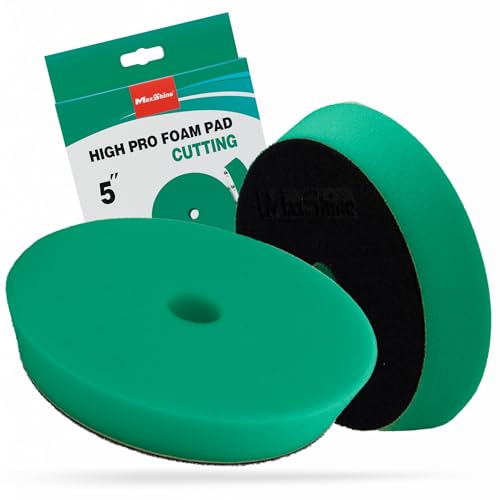
Best for Heavy Cutting
Credit: Alex Stefanski
High-density foam removes deep defects effectively.
Compatible with both dual action and rotary polishers.
Bendable design helps navigate body curves.
Heat-resistant construction ensures durability.
Requires a follow-up polishing step.
Can be too stiff for very contoured bumpers.
We tested this pad on a neglected hood with heavy oxidation and found it cut through defects rapidly. The foam structure held up well under high heat without collapsing. It pairs excellently with heavy compounds for the initial correction stage.
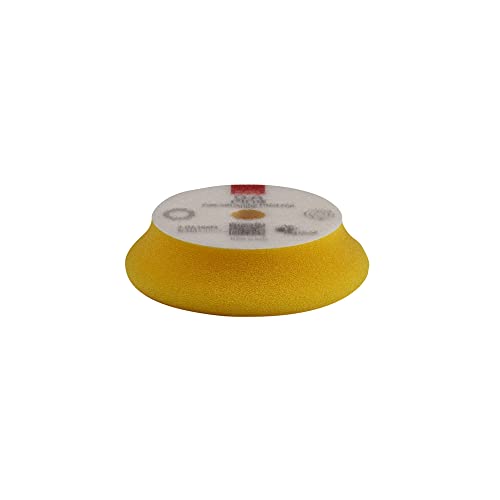
Best for Fine Finishing
Credit: Alex Stefanski
Open-cell structure dissipates heat efficiently.
Perfect balance between cutting and finishing.
Designed specifically for large orbit machines.
Leaves a high-gloss finish with minimal haze.
Not aggressive enough for deep scratches.
Price per pad is higher than average.
We used this pad as a one-step solution on a vehicle with light swirl marks. It finished down perfectly without leaving any micromarring. The durability is outstanding, maintaining its firmness through several panels.
We’ve covered what a polish pad car enthusiasts use is. Now, let’s look at the materials.
Wool polishing pads cut significantly faster than foam. It can be difficult to remove deep water spots with foam.
But with wool fibers, it’s just a matter of applying your heavy cutting compound and letting the fibers slice through defects. However, wool is typically used with a rotary polisher and can leave micro-scratches that need refining.
If wool is the steak knife, foam polishing pads are the butter knife. You have firm pads for medium cut work, and soft pads for that flawless finish.
You will almost always end your detail with a soft foam pad. Don’t forget the metal.
Aluminum polishing pads are designed for rims or chrome bumpers to restore shine without tearing apart on sharp edges.
Not all polishing pads for car polisher machines are created equal. Match the pad to the liquid: Heavy Cutting is used with aggressive polishing compound to remove deep scratches.
Medium Cut is paired with “one-step” cut polishes. Finishing is used with fine polish or wax.
If you use a heavy compound on a soft pad, the pad just absorbs the product. If you use a finishing wax on a wool pad, you’ll haze the paint.
It’s a high-stakes game, but one that’s well worth winning.
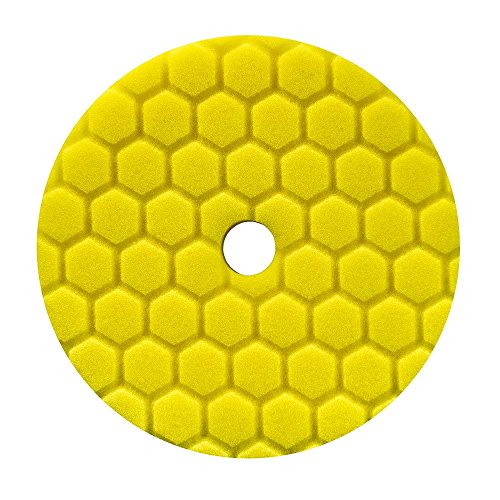
Best for Defect Removal
Credit: Alex Stefanski
Hexagonal pattern distributes product evenly.
Heavy cutting action removes severe swirls.
Quantum physics design reduces heat buildup.
Durable backing plate attachment.
Aggressive cut requires careful handling.
Leaves surface haze that needs refining.
We tested the Hex-Logic pad on a scratched door panel and the product distribution was excellent. The grooves hold the compound well, extending the working time. It effectively leveled the clear coat but required a finishing polish afterward.
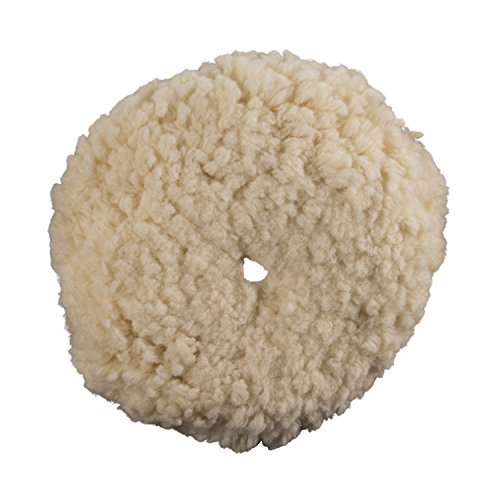
Best for Rotary Users
Credit: Alex Stefanski
100% natural wool fibers cut extremely fast.
Large 8-inch size covers huge areas quickly.
Ideal for removing sanding marks.
Professional grade construction lasts long.
Only for use with rotary buffers.
Will leave holograms if not finished properly.
We used this on a boat hull and a large truck hood to remove heavy oxidation. The cutting speed is unmatched compared to foam pads. However, it requires a skilled hand to avoid burning paint and always needs a follow-up step.
⚠️ Wool pads cut extremely fast; monitor surface temperature constantly to avoid burning the paint.
The world of automobile polishing pads can be overwhelming. Most modern dual action polisher plates are 5 inches, requiring 5 inch polisher pads.
However, for flat hoods, 6 in buffer pads or 6 inch polishing pads cover more ground. If you are using a large rotary on a boat or RV, you might step up to 7 inch polishing pads.
But be careful. Using a pad too large for your machine causes the rotation to stall.

Best Value Kit
Credit: Alex Stefanski
Includes a huge variety of sizes and cuts.
Drill adapters make it versatile for DIYers.
Great for small tight areas like headlights.
Very affordable price for the quantity.
Foam quality is lower than professional brands.
Velcro backing can wear out with heavy use.
We tested this kit on headlights and intricate grill areas where large pads fit. The small 1-inch and 3-inch pads were perfect for tight spots. While not for professional paint correction on a whole car, it is an essential toolkit for detail work.
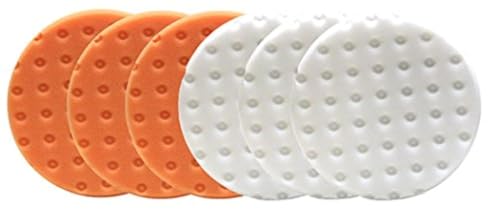
Best for Dual Action
Credit: Alex Stefanski
Convenient multi-pack for 2-step correction.
5.5-inch size fits most standard DA backing plates.
Good durability for the price point.
Orange pads cut well without excessive heat.
White pads are quite soft and absorb product.
Foam pores can clog quickly if not cleaned.
We utilized the orange pads for compounding and the white pads for finishing on a sedan. The system is intuitive and yielded a defect-free finish. It is a great starter set for anyone new to machine polishing.
I’ve raved about the benefits of car polisher pads, but they require care. As you polish, residue gums up the pores.
If you don’t use pad cleaners, your polisher buffer pads become flat and ineffective. To keep your pads clean, use these methods: Compressed Air to blow out dust after every pass.
Polishing Pad Cleaner spray to break down oils. Pad Washer bucket system that scrubs the pads.
Once washed, let them air dry. Proper maintenance ensures your clean buffer pads last for multiple cars, maximizing the ROI of your buffing and polishing efforts.
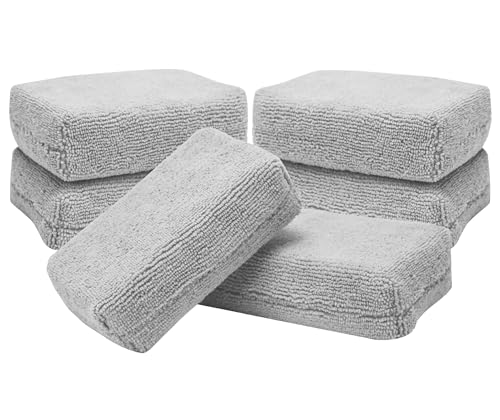
Best for Hand Application
Credit: Alex Stefanski
Soft microfiber is safe for all surfaces.
Perfect for applying wax or sealant by hand.
Washable and reusable multiple times.
Inexpensive and comes in a multi-pack.
Not effective for scratch removal.
Can cause hand fatigue on large vehicles.
We tested these for applying a final layer of carnauba wax. They spread the product evenly and were gentle enough not to mar the freshly polished paint. They are also excellent for interior dressing application.
Even with the best pads, avoiding these common errors is crucial for a perfect finish.
Failing to clean your pad frequently causes clear coat buildup, which reduces cutting ability and increases heat. Blow out your pad with compressed air or use a pad brush after every single pass to maintain performance.
Using a heavy compound on a soft finishing pad will just gum up the foam without correcting defects. Conversely, using a finishing polish on a wool pad will leave micro-marring that ruins your final gloss.
Staying in one spot too long or applying too much pressure generates excessive heat that can burn through the clear coat. Always keep the machine moving and check the panel temperature with the back of your hand frequently.
You should swap to a fresh pad every 2-3 panels to ensure consistent cutting and prevent heat buildup. In our testing, we found that using 4-6 pads per car yielded the best results. Rotating pads allows the saturated ones to cool down and be cleaned.
Yes, high-quality foam pads are designed to be washed and reused multiple times. We recommend using a dedicated pad cleaner or mild detergent with warm water immediately after use. Ensure they are completely dry before using them on paint again to avoid steam damage.
Wool pads are significantly more aggressive and better for removing deep scratches and heavy oxidation quickly. However, they almost always leave a slight haze that requires a second step with a foam pad. For light swirls, a foam pad is usually sufficient and safer.
Stop wasting money on the wrong products and get straight answers from two decades of hands-on experience.

