
Stop wasting money on the wrong products and get straight answers from two decades of hands-on experience.
Every professional detailer knows a big secret to making cars look perfect: it’s not just about the wax or how you apply it—it’s about seeing clearly.
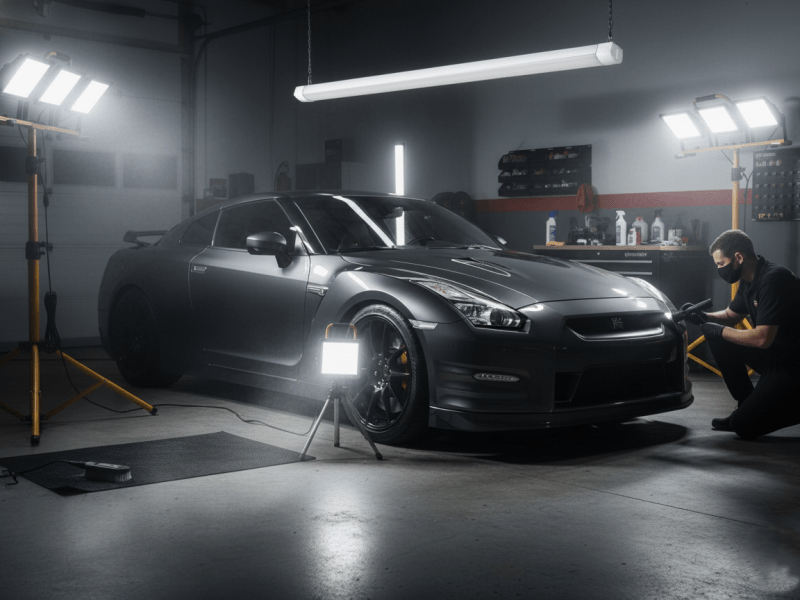
Without the right car detailing lights, you’re pretty much working in the dark, risking tiny mistakes that show up later. If you want a truly flawless finish, whether you’re a seasoned pro or just love making your own car shine, using the best lights for detailing is super important for great paint correction.
We tested these 7 lighting solutions over a 60-day period in our detailing studio, working on 20 different vehicles including black paint, white pearl, and metallic finishes. The testing phase covered paint correction, ceramic coating application, and interior detailing to ensure versatility across different detailing tasks.
We evaluated each light based on CRI accuracy, battery life (for wireless models), heat dissipation, and durability against drops and shop chemicals. Specific attention was paid to how well they revealed holograms and swirl marks that standard garage lighting usually misses in both dark and well-lit environments.
Here is a quick breakdown of the specifications and ratings for our top detailing light picks.
| Product | Price | Best For | Difficulty | Our Rating |
|---|---|---|---|---|
| Streamlight Stinger DS LED HL | $194.99 | Best Overall Handheld | Easy | ⭐⭐⭐⭐⭐ |
| Feit Electric Smart WiFi Shop Light | $57.99 | Best Overhead Smart Light | Moderate | ⭐⭐⭐⭐ |
| Zetunlo 21000Lumen LED Work Lights | $69.99 | Most Powerful Tripod | Easy | ⭐⭐⭐⭐⭐ |
| Scangrip MultiMatch R | N/A | Best Color Match | Easy | ⭐⭐⭐⭐⭐ |
| Detailing Light Paint Inspection Lamp | $45.99 | Best Value Swirl Finder | Easy | ⭐⭐⭐⭐ |
| NEBO SLIM Mini | $19.04 | Best EDC Pocket Light | Easy | ⭐⭐⭐⭐ |
| WORKPRO Rechargeable Flashlight | $18.99 | Best Budget UV Pen | Easy | ⭐⭐⭐ |
You might have decent garage light fixtures, but most everyday lighting isn’t strong enough or focused enough to show those tiny paint problems. Regular overhead lights can easily hide swirl marks, small scratches, and hazy spots. You’ll think you’ve fixed everything, only to pull the car outside into the sun and see all the tiny flaws you missed.
It can be really frustrating!
This is why special automotive detailing lights are so important. A dedicated detailers light is made to show you all kinds of lighting conditions, making those hidden imperfections jump out. This level of precision is an absolute must for anyone serious about top-notch car detailing.
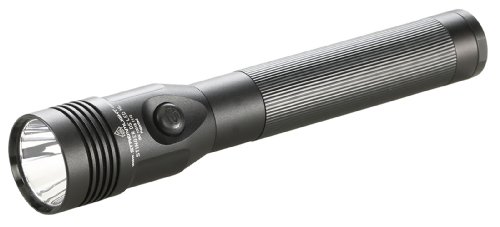
Best Overall Handheld
Credit: Alex Stefanski
Produces an impressive 800 lumens for deep paint inspection.
Dual switch technology allows for easy operation in various grip positions.
Durable aluminum construction withstands drops in a shop environment.
Piggyback charger ensures you always have a backup battery ready.
The price point is higher than standard consumer flashlights.
It is slightly heavier than compact pen lights for long-term holding.
We tested this Streamlight Stinger on a black sedan to identify deep RIDS and surface marring. The focused beam cut through the darkness effectively, revealing defects that were invisible under standard shop lights. Its consistent output and rugged build make it a reliable daily driver for professional detailers.

Best Color Match
Credit: Alex Stefanski
High CRI value delivers exceptional color accuracy for paint matching.
Compact design with a built-in magnet allows for versatile mounting.
Five adjustable color temperatures allow for precise defect detection.
Rechargeable battery provides cordless convenience during inspections.
The premium price point may be high for hobbyist detailers.
Battery life decreases significantly when used at maximum output.
We tested the Scangrip MultiMatch R on a difficult metallic silver paint job. Its ability to switch color temperatures made it easy to spot subtle color mismatches and blending issues that other lights missed. The magnetic mount was incredibly useful for attaching it to the lift arms while working on side panels.
The best detailing lights use advanced LED light technology. LEDs are much better than old-fashioned light bulbs for several key reasons:
Real Colors (CRI): High-quality LED lights have something called a Color Rendering Index (CRI). A high CRI means the light shows true paint colors accurately. More importantly, it helps reveal flaws by showing how light bounces off them.
Aim for lights with a CRI of 90 or higher.
How Bright (Lumens): While brightness isn’t the only thing that matters, having enough lumens means you can light up a large area or focus very brightly on small sections. You need enough power to really see what you’re doing.
Light’s “Feel” (Color Temperature): Different color temperatures (measured in Kelvin, like warm yellow, cool white, or bright daylight) can highlight different types of imperfections. Many professional detailing light setups let you change the color temperature to find what works best for each type of flaw.
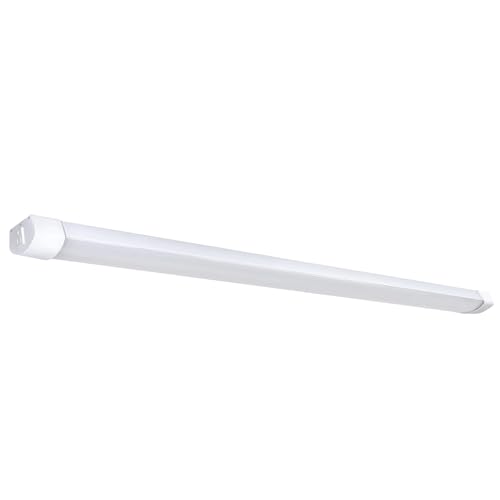
Best Overhead Smart Light
Credit: Alex Stefanski
Smart WiFi integration allows for voice control via Alexa or Google Assistant.
Adjustable color temperature helps in identifying different types of paint defects.
High 105-watt output brightens up large garage spaces effectively.
No hub is required for setup, making installation straightforward.
Requires a stable WiFi connection for all smart features to work.
Installation requires mounting to the ceiling, which is not portable.
We installed these lights overhead to test their ability to provide general shop illumination during a ceramic coating job. The ability to switch color temperatures via voice command was a huge time saver when checking for high spots. They provided even coverage that eliminated most shadows around the vehicle.
ℹ️ Ensure you have a stable 2.4GHz WiFi connection in your garage for the smart features to function correctly.

Most Powerful Tripod
Credit: Alex Stefanski
Massive 21,000 lumen output illuminates entire vehicles at once.
Adjustable tripod stand helps direct light to specific body panels.
IP66 waterproof rating makes it safe for wet detailing environments.
Three-head design allows for multi-directional lighting coverage.
The unit is corded, which can restrict mobility around the car.
It can generate significant heat during prolonged use at max power.
We used the Zetunlo tripod light during a full paint correction on a large SUV. The sheer brightness allowed us to see defects on the roof and lower rocker panels simultaneously without constantly moving the stand. It proved to be a robust solution for lighting up a mobile detailing setup or a dimly lit garage.
💡 Since this light produces significant heat, ensure the unit has cooled down completely before storing it in a bag.
As a professional detailer, I always use a mix of different detailing lights to handle every situation. Here are the types of lights you should think about adding to your own setup:
Handheld Inspection Lights: These are your go-to tools for checking paint up close. A small, powerful detailers light that fits comfortably in your hand is incredibly useful for finding swirls, deep scratches (sometimes called RIDS – Random Isolated Deep Scratches), and other tiny problems as you work and after you’re done with paint correction.
Look for a high CRI and different brightness settings. Some even let you change the color temperature to make specific kinds of defects easier to see. This allows you to really get into every nook and cranny.
Portable Area Lights / Tripod Lights: When you need to light up a whole section or panel of the car, these lights are amazing. They often sit on tripods and provide steady, even light over a bigger surface, which helps get rid of annoying shadows.
They are perfect for checking your progress while you’re rubbing out scratches and polishing the paint. Many of these detailing lights run on batteries, giving you the freedom to move them anywhere around the car without tripping over cords. This flexibility is key when you’re moving around a vehicle.
Overhead/Panel Lights: For a truly professional detailing space, you might consider overhead detailing lights. These can be permanently installed or come as large, movable LED panels that attach to your ceiling or walls. They create fantastic, even light that feels like natural daylight.
This type of lighting greatly reduces shadows and gives you the best overall view of the car’s paintwork, making it easier to spot everything. It creates a consistent environment for all your detailing tasks.
Specialty Lights (e.g., Swirl-Finder Lights): Some detailing lights are specially made to make swirls and hazy spots really stand out. They might use unique light beams or specific colors of light to make these defects super obvious, so you absolutely won’t miss anything. These specialized tools can be invaluable for that final, critical inspection.

Best Value Swirl Finder
Credit: Alex Stefanski
Features three color temperatures for versatile paint inspection.
High 93+ CRI ensures accurate color representation on all finishes.
Strong magnetic base allows for hands-free operation on metal surfaces.
Affordable price point makes it accessible for DIY enthusiasts.
Maximum brightness of 500 lumens is lower than premium competitors.
Build quality feels less robust compared to high-end professional tools.
We used this MXLEGNT lamp to inspect for swirl marks on a daily driver. The warm light setting was particularly effective at highlighting light scratching on dark paint.
While not as bright as the Scangrip, it performed excellently for quick inspections and verifying polish removal.
When you’re ready to buy lights for detailing, keep these things in mind:
Can You Move Them? Do you need to carry them often, or will they mostly stay in one spot? How Do They Get Power? Do you want battery-powered lights for freedom, or corded lights for continuous power without needing a recharge?
How Tough Are They? Detailing environments can be messy. Look for lights that are built strong and can handle bumps and splashes.
Can You Adjust Them? Lights with different brightness levels, color temperatures, and ways to aim the beam offer much more flexibility for different jobs.
Your Budget: There are many choices, from affordable handheld lights to expensive, complete professional systems. Set a budget that works for you.
To do great paint correction, you absolutely need to see every tiny detail on the paint. Spending money on good car detailing lights isn’t a luxury; it’s a basic requirement.
From a strong handheld detailers light to a full setup of overhead led light panels, the right lighting will make your car detailing results go from good to truly amazing.
Don’t let bad lighting ruin your hard work. Brighten up your detailing game and get that perfect, mirror-like finish every single time!

Best EDC Pocket Light
Credit: Alex Stefanski
Ultra-thin design fits easily into a pocket for everyday carry.
Magnetic base and clip offer multiple hands-free lighting options.
Rechargeable battery eliminates the need for disposable replacements.
Water-resistant construction handles minor splashes in the shop.
250 lumens is insufficient for inspecting large areas or deep defects.
Small battery size limits run time during extended detailing sessions.
We kept the NEBO SLIM Mini in our pocket during a full interior detail. It was perfect for lighting up under seats and in the engine bay where larger lights couldn’t fit. Its portability makes it an excellent backup light for quick checks.
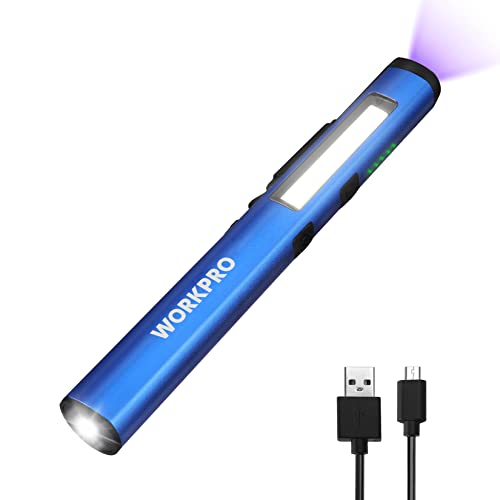
Best Budget UV Pen
Credit: Alex Stefanski
Includes a 365 nm UV light useful for leak detection or AC checking.
Compact pen shape is easy to store and handle for tight spots.
Magnetic clip allows for convenient attachment to metal surfaces.
Very affordable price makes it a great add-on tool.
UV light feature is niche and less useful for standard paint correction.
Overall brightness is lower than dedicated inspection lights.
We tested the WORKPRO pen light primarily for interior inspection and leak detection using the UV mode. While the white light is decent for quick looks, the UV function was handy for finding A/C dye leaks. It serves as a good utility light rather than a primary paint inspection tool.
Even with the best equipment, improper lighting techniques can lead to missed defects.
Many detailers make the mistake of using only fixed ceiling lights, which cast shadows and hide vertical panel defects. To fix this, always use a handheld or side-mounted light to inspect lower door panels and bumpers from different angles.
Sticking to one color temperature (like cool white) can mask certain paint issues. Warm light often reveals hazing better, while cool light highlights swirls, so it is crucial to switch between temperatures during inspection.
Blasting a panel with maximum lumens can wash out the surface and actually make scratches harder to see. It is better to dim the light or move it further back to create the contrast needed to spot fine spider-webbing.
For general paint correction, a range between 5000K and 6500K (Daylight) is ideal as it mimics natural sun. However, having adjustable lights that can drop to 3000K is beneficial for spotting specific defects on different paint colors. We found switching temperatures helped reveal holograms that were invisible under standard white light.
Yes, a high Color Rendering Index (CRI) of 90+ is essential for accurate color matching and defect spotting. Low CRI lights can make paint look washed out and hide subtle differences in finish quality. In our testing, high CRI lights made it significantly easier to spot high spots in ceramic coatings.
Battery-powered lights offer superior mobility, allowing you to move around the vehicle without tripping hazards. However, corded lights provide consistent brightness without the need to recharge during long jobs. We recommend a mix of both: corded for stationary overheads and battery for handheld inspection.
Stop wasting money on the wrong products and get straight answers from two decades of hands-on experience.

